
Blog
Corbett vs Ranthambore: Best 5-Day Wildlife Photo Trip in November Under 50K Budget

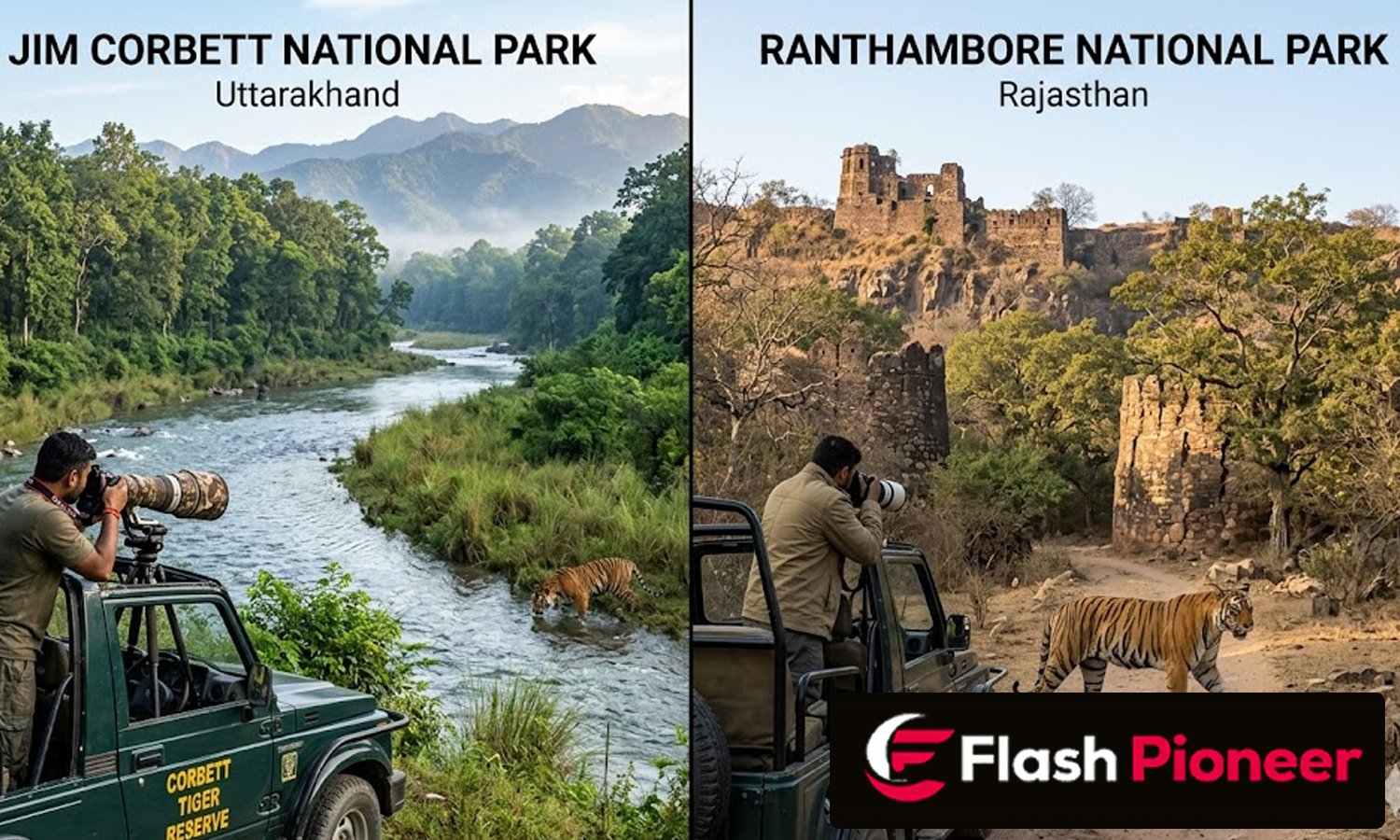
So you have five days, a 50,000 rupee budget, and a burning desire to photograph tigers and wildlife in their natural habitat. November is knocking at the door, and you are stuck between two of India’s most famous national parks. Should you go to Jim Corbett or Ranthambore?
Both parks are brilliant. Both have tigers. Both are very popular with wildlife photographers. But they are quite different in terms of terrain, tiger sightings, photography conditions, and what your money will actually get you.
Why November is a Good Month for Both Parks
Before we compare the two parks, let us first talk about why November is a smart choice for a wildlife photography trip.
November falls in the early winter season in North India. The monsoon rains are gone, which means the grass and vegetation start to thin out. This is important for photographers because dense grass makes it very hard to spot and photograph animals. As the grass dries and animals come out more often to drink water, your chances of seeing wildlife go up.
The weather in November is also very comfortable. Days are warm and pleasant, and nights are cool. You do not need to worry about extreme heat or rain. Mornings and evenings, which are the best times for safari, have soft golden light that is perfect for photography.
Both Corbett and Ranthambore are open in November, which is not always the case during the monsoon months when some zones are closed.
Jim Corbett National Park: What to Expect
Jim Corbett is India’s oldest national park, located in the Nainital district of Uttarakhand. It was established in 1936 and has a long history of wildlife conservation. The park is named after the famous hunter and naturalist Jim Corbett, who later became a strong supporter of wildlife protection.
Terrain and Landscape
Corbett’s landscape is a mix of dense sal forests, grasslands called “chaurs,” river valleys, and hills. The Ramganga River runs through the park and is a major water source for animals. Because of its varied terrain, Corbett feels more wild and untamed compared to Ranthambore.
For photographers, this mixed terrain offers a lot of variety. You can get shots of animals near the river, in open grasslands, or against a forested hill background. However, the dense forest also means that wildlife can be harder to spot. Sightings here feel more natural and unplanned, which can be both exciting and frustrating.
Tiger Population and Sightings
Corbett has one of the highest tiger densities in the country. As of recent estimates, the park and its buffer zones have around 260 tigers or more, making it one of the best tiger reserves in India. However, because the forest is dense and the park is large, tiger sightings are not guaranteed and can sometimes be rare in specific zones.
The Dhikala zone is the most popular and known for good tiger sightings, especially near the Ramganga reservoir. However, Dhikala requires a night stay at the forest rest house and is only accessible through booked accommodation inside the park.
Safari Zones in Corbett
Corbett has multiple safari zones. The main ones are:
Dhikala Zone: The best zone for wildlife viewing and tiger sightings. It has open grasslands where wildlife is more visible. You need to book forest rest house accommodation to access this zone.
Bijrani Zone: A good option for day visitors. It has a mix of sal forest and open areas and offers decent chances of seeing tigers and elephants.
Jhirna Zone: Open all year. Good for leopards, sloth bears, and sambar deer. Tiger sightings are possible but less frequent.
Sitabani Buffer Zone: Not a core zone but allows private vehicles. Popular for bird photography and occasional wildlife sightings.
For a 5-day trip, you should try to cover at least two zones, including Dhikala if your budget allows for the stay inside the park.
Photography Highlights at Corbett
Corbett is not just about tigers. It is also excellent for:
- Elephants in large herds, especially near the river
- Gharials and mugger crocodiles along the Ramganga
- Over 600 species of birds, making it a paradise for bird photographers
- Leopards, especially in the hilly buffer zones
- Otters, fishing eagles, and pied kingfishers near water bodies
If you are a photographer who loves variety and does not want to focus only on big cats, Corbett is a more rewarding destination.
Ranthambore National Park: What to Expect
Ranthambore is located in the Sawai Madhopur district of Rajasthan. It became a national park in 1980 and is one of the most photographed tiger reserves in the world. The park is famous for its bold and visible tigers, many of whom have become well-known by name among wildlife enthusiasts.
Terrain and Landscape
Ranthambore has a very different feel from Corbett. The landscape is dry and rocky, with scrub forests, open lakes, and ancient ruins including the famous Ranthambore Fort that sits right inside the park. The dry deciduous forest and rocky terrain mean that there is less cover for animals, which makes them more visible.
This open terrain is a big advantage for photographers. When a tiger is out, you can usually see it clearly without too much obstruction. The backdrop of ancient ruins, lakes, and dry rocky hills also gives photographs a very dramatic and unique look that is hard to find anywhere else.
Tiger Population and Sightings
Ranthambore is home to around 70 to 80 tigers in the core and buffer areas. While this number is smaller than Corbett’s population, the key difference is the quality of sightings. Ranthambore’s tigers are well-habituated to safari vehicles and often come out in open areas near lakes and roads.
The park has produced some of the most iconic tiger photographs in the world. Tigers like Machali, T-17, T-19, and their descendants have been photographed by thousands of visitors. In November, as water levels in the lakes drop, tigers visit the water edges more frequently, giving photographers excellent opportunities.
Read More : “Keine Karriere-Subdomain Gefunden” Meaning: Simple Guide to This Website Error and How to Fix It
Safari Zones in Ranthambore
Ranthambore is divided into ten zones. Zones 1 to 5 are the core zones and are considered the best for tiger sightings. Zones 6 to 10 are buffer zones.
Zone 1 (Kachida Valley): Good for leopards and sloth bears.
Zone 2 and 3: Near the lakes and often give excellent tiger sightings.
Zone 4 and 5: Pass through the main forest and open meadows. Very popular with photographers.
Zone 6 to 10: Buffer zones with fewer vehicles and good for birds and occasional tiger sightings.
For a 5-day trip, try to book safaris in zones 2, 3, 4, and 5 for the best photography opportunities.
Photography Highlights at Ranthambore
- Tigers in open areas near lakes, which is rare in other parks
- Dramatic background of Ranthambore Fort and ancient step-wells
- Sambar deer, chital, nilgai, and wild boar
- Marsh crocodiles in the lakes
- Leopards, striped hyenas, and sloth bears
- Birds like painted storks, sarus cranes, and various raptors
Budget Comparison: Where Does Your 50K Go?
This is where things get very practical. Let us break down the costs for a 5-day trip to each park in November.
Jim Corbett Budget Estimate (Per Person, 5 Days)
| Expense | Approximate Cost |
|---|---|
| Train or bus travel (round trip from Delhi) | Rs 800 to Rs 1,500 |
| Accommodation (budget to mid-range, 4 nights) | Rs 8,000 to Rs 15,000 |
| Safari fees (4 to 6 safaris) | Rs 8,000 to Rs 14,000 |
| Food and meals | Rs 3,000 to Rs 5,000 |
| Guide charges | Rs 2,000 to Rs 3,000 |
| Miscellaneous | Rs 1,000 to Rs 2,000 |
| Total Estimate | Rs 22,000 to Rs 40,000 |
If you want to stay inside Dhikala zone at the forest rest house, add Rs 5,000 to Rs 8,000 for that accommodation.
Corbett is quite manageable within a 50K budget, especially if you travel by train and stay in guesthouses near Ramnagar, which is the base town for the park.
Ranthambore Budget Estimate (Per Person, 5 Days)
| Expense | Approximate Cost |
|---|---|
| Train or bus travel (round trip from Delhi or Jaipur) | Rs 600 to Rs 1,200 |
| Accommodation (budget to mid-range, 4 nights) | Rs 6,000 to Rs 14,000 |
| Safari fees (4 to 6 safaris) | Rs 10,000 to Rs 16,000 |
| Food and meals | Rs 2,500 to Rs 4,500 |
| Guide charges | Rs 1,500 to Rs 2,500 |
| Miscellaneous | Rs 1,000 to Rs 2,000 |
| Total Estimate | Rs 21,000 to Rs 40,000 |
Ranthambore safari bookings need to be done well in advance through the official government website because they get filled up quickly, especially for core zones in peak season. Booking early also helps you get the preferred zones.
Both parks fit comfortably within a 50,000 rupee budget for one person. If you are traveling as a couple or small group, you can split accommodation costs and bring the per-person cost down further.
Safari Vehicle Comparison: Jeep vs Canter
Both parks offer two types of safari vehicles:
Jeep (Gypsy): A six-seater open-top vehicle. Better for photography because you have a lower, more flexible angle and fewer people in the vehicle. Faster and can navigate narrow tracks. More expensive per seat but worth it for serious photographers.
Canter: A larger vehicle that holds around 20 passengers. Cheaper per seat but harder for photography because of limited space and higher angle. Better for budget travelers or those not primarily focused on photography.
For wildlife photography, always book a jeep if your budget allows. In Ranthambore especially, seats fill up fast, so book early.
Which Park is Better for Wildlife Photography?
This is the big question. Here is an honest answer:
Ranthambore is better if your main goal is tiger photography. The open terrain, habituated tigers, and dramatic landscapes make it one of the best places in the world for tiger photos. You have a higher chance of getting a clear, close-up shot of a tiger in Ranthambore compared to Corbett.
Corbett is better if you want variety and a more authentic wilderness experience. The dense forest, the river, the elephants, the birds, and the overall wildness of the park make it more rewarding for photographers who want to capture a wide range of wildlife and landscapes.
If this is your first major wildlife photography trip and you want to come back with strong tiger photos, go to Ranthambore. If you want a more complete wildlife experience and do not mind that tiger sightings may be less frequent, go to Corbett.
Practical Photography Tips for Both Parks
No matter which park you choose, these tips will help you get better photographs:
Use a telephoto lens. A lens of at least 300mm to 400mm is ideal for wildlife photography. Animals in national parks are usually at a distance, and a good telephoto lens lets you fill the frame without disturbing them.
Go for morning safaris. The light in the first hour after sunrise is soft and golden. Animals are also more active in the morning. This is the best time for photography in both parks.
Arrive early at the gate. Safari vehicles queue up at the gate before it opens. Arriving early means you get into the park sooner and can cover more ground.
Stay patient and quiet. Loud noise and sudden movement can scare animals away. Stay still, keep your camera ready, and wait.
Shoot in RAW format. RAW files give you more control during editing and allow you to recover details in shadows and highlights.
Carry extra batteries and memory cards. You will take hundreds of shots in a day and the last thing you want is to run out of space or power.
Hire a knowledgeable guide. A good local naturalist guide can dramatically improve your chances of finding wildlife. They know the animal movements and behavior patterns in the park.
Final Verdict: Which Should You Choose?
Here is a simple summary to help you decide:
Choose Ranthambore if you:
- Want the best chance of photographing tigers in the open
- Love dramatic landscapes with ruins and lakes as background
- Are a first-time wildlife photographer
- Want a slightly shorter and cheaper journey from Delhi or Jaipur
Choose Corbett if you:
- Want a richer overall wildlife experience with elephants, birds, and more
- Prefer a more forested and natural-feeling environment
- Want to explore different zones and terrain types
- Are interested in more than just big cats
Both parks will give you memories and photographs that you will not forget. Within a 50,000 rupee budget over five days, both are very much achievable. The key is to plan and book in advance, especially for safaris and accommodation.
November is genuinely one of the best times to visit both parks. You will have good light, comfortable weather, and active wildlife. Whether you choose the ancient ruins of Rajasthan or the river forests of Uttarakhand, you are in for a very special experience.
10 Frequently Asked Questions
1. Which park has more tigers, Corbett or Ranthambore?
Corbett has a larger tiger population overall, with estimates of over 250 tigers in the reserve. Ranthambore has around 70 to 80 tigers but is better known for frequent and clear tiger sightings because of its open terrain and habituated tigers.
2. Is November a good time to visit both Corbett and Ranthambore?
Yes, November is an excellent month for both parks. The monsoon is over, vegetation thins out making wildlife easier to spot, and the weather is comfortable for safari and photography.
3. Do I need to book safaris in advance?
Yes, absolutely. For both parks, safari bookings should be done in advance through the official government portal. Ranthambore in particular fills up very quickly, especially for core zones. Booking two to three months ahead is a safe approach.
4. What is the best zone in Ranthambore for tiger photography?
Zones 2, 3, 4, and 5 are generally considered the best for tiger sightings. Zones 2 and 3 are near the lakes and often give excellent close-range views. However, all core zones are good and availability depends on luck and timing too.
5. What is the best zone in Corbett for wildlife photography?
Dhikala zone is widely considered the best in Corbett for both wildlife variety and tiger sightings. It requires a stay at the forest rest house inside the park. Bijrani is a good alternative for day visitors.
6. Can I do this trip solo within the 50K budget?
Yes, a solo traveler can comfortably do a 5-day trip to either park within 50,000 rupees. Choosing budget guesthouses near the park and traveling by train keeps costs well within range. Sharing a jeep with other travellers also cuts safari costs.
7. Which park is easier to reach from Delhi?
Both parks are reachable from Delhi. Corbett is around 260 kilometres and takes about 5 to 6 hours by road or overnight train to Ramnagar. Ranthambore is around 400 kilometres and is well-connected by train to Sawai Madhopur, which is right next to the park. Ranthambore may have a slight edge in terms of train convenience.
8. Do I need a professional camera for wildlife photography?
You do not need a very expensive professional camera, but a DSLR or mirrorless camera with a good telephoto lens of at least 300mm will give you much better results than a smartphone. The lens matters more than the camera body in wildlife photography.
9. Are night safaris available at either park?
No, national parks in India do not allow overnight safaris inside the core zones. Safaris are only allowed during the morning and afternoon slots. Some buffer zones may allow late evening drives, but these are different from night safaris.
10. Can I see animals other than tigers in these parks?
Absolutely. Both parks have rich wildlife beyond tigers. Corbett is excellent for elephants, gharials, otters, and a huge variety of birds. Ranthambore has marsh crocodiles, sambar, chital, sloth bears, leopards, and many birds. Even if you do not spot a tiger, you will not come back disappointed.
Stay connected for the latest news and updates on, Flash Pioneer

How UK Businesses With Offshore Interests Can Stay HMRC Compliant

Smart Online Shopping: 10 Ways to Save Money on Every Purchase

Who Is Royce Beckly Adkins? The Life and Story of Sinbad’s Son

What Is Snokido? A Simple Guide to Free Online Games and Popular Features

Gimkit Host Explained: How to Start and Run a Successful Live Game

Who Is Elizabeth Hatcher-Travis? The Life and Story of Randy Travis’ Ex-Wife

Who Is Talita Roberta Pereira? The Life, Family, and Story of Charles Oliveira’s Wife

i’m a skincare beginner. is nivea a good starting brand compared to garnier?

Who Is Isaiah Rahsaan Iverson? The Life and Story of Allen Iverson’s Son

Laura Marie Holtzmann: Simple Life Story of Joyce Meyer’s Daughter in Easy Words
How UK Businesses With Offshore Interests Can Stay HMRC Compliant
Smart Online Shopping: 10 Ways to Save Money on Every Purchase
Who Is Royce Beckly Adkins? The Life and Story of Sinbad’s Son
What Is Snokido? A Simple Guide to Free Online Games and Popular Features
Gimkit Host Explained: How to Start and Run a Successful Live Game
Who Is Elizabeth Hatcher-Travis? The Life and Story of Randy Travis’ Ex-Wife
Who Is Talita Roberta Pereira? The Life, Family, and Story of Charles Oliveira’s Wife
i’m a skincare beginner. is nivea a good starting brand compared to garnier?
Who Is Isaiah Rahsaan Iverson? The Life and Story of Allen Iverson’s Son
Laura Marie Holtzmann: Simple Life Story of Joyce Meyer’s Daughter in Easy Words
-

 Celebrity6 months ago
Who Is Vanna Bardot (Vanna Bardeau)? Easy Story of Her Life and Career
-
 Celebrity4 months ago
Who Is Talita Roberta Pereira? The Life, Family, and Story of Charles Oliveira’s Wife
-

 Food4 months ago
Best Arroz con Leche Boliviano Near Me: Where to Find This Creamy Bolivian Dessert Near You
-

 Tech5 months ago
Droven.io Tech Education Trends: Simple Guide to Modern Learning with AI and Digital Tools