
News
United Airlines Flight UA770 Emergency Diversion: What Happened and Why It Landed Safely

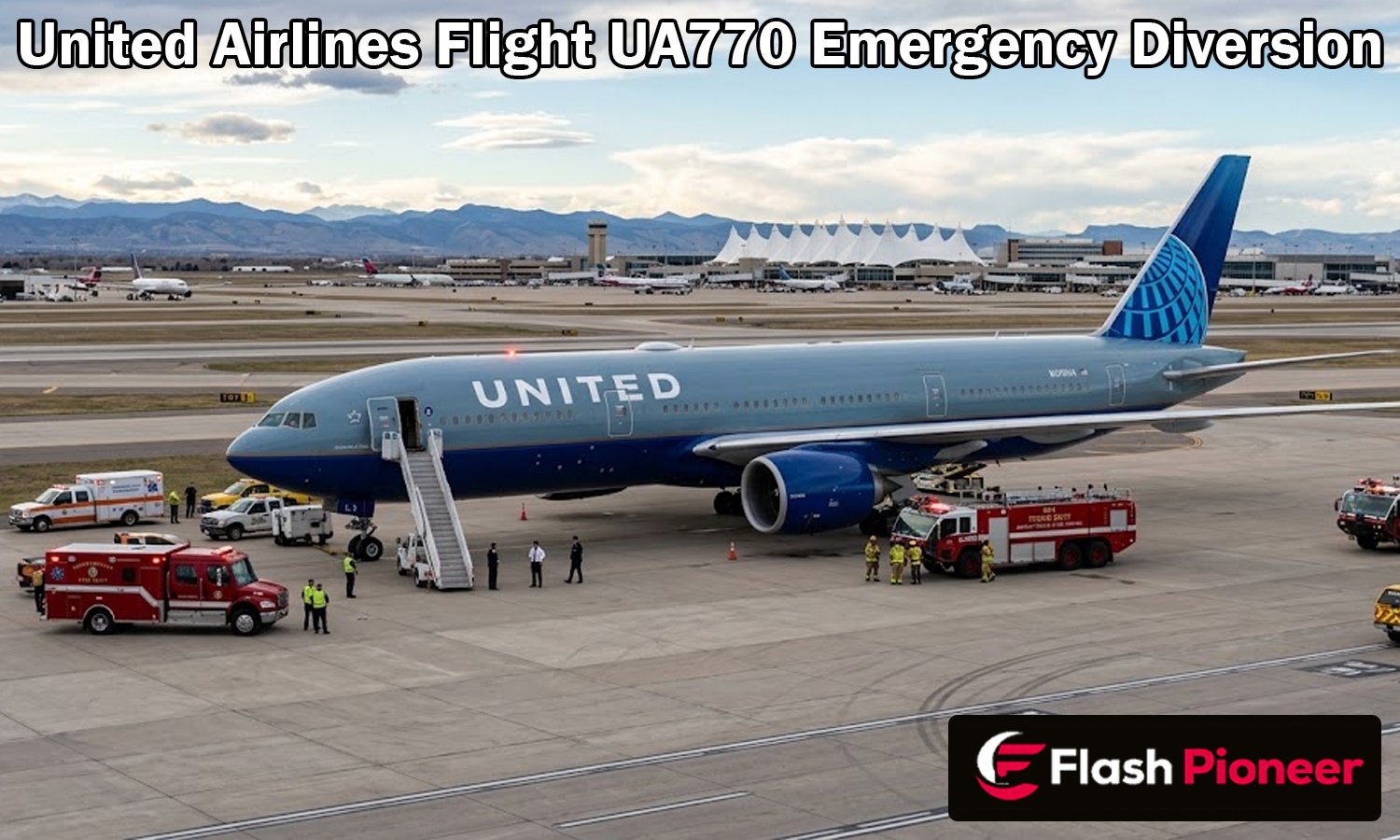
Air travel is one of the safest ways to get from one place to another. But every so often, something unexpected happens mid-flight that reminds us why safety systems exist in the first place. On May 27, 2025, United Airlines Flight UA770 became one such story. A routine transatlantic journey from Barcelona to Chicago suddenly changed course, and the aircraft landed at London Heathrow instead. No one was hurt. Every single passenger and crew member walked off the plane safely. This article explains exactly what happened, why the pilots made the decisions they did, and what the whole event tells us about modern aviation safety.
The Flight: What Was UA770?
United Airlines Flight UA770 was a regular long-haul service connecting Barcelona El Prat Airport (BCN) in Spain with Chicago O’Hare International Airport (ORD) in the United States. It is a transatlantic route, meaning it crosses the Atlantic Ocean, and typically takes around nine hours to complete.
On May 27, 2025, the aircraft used for this flight was a Boeing 787-9 Dreamliner, with the tail number N26902. The Dreamliner is a modern, fuel-efficient wide-body jet that is well-known for its high-tech systems and long-range capability. It is one of the most advanced passenger aircraft flying today. On board were 257 passengers and 12 crew members, all of whom were expecting a smooth and uneventful flight to Chicago.
The plane took off from Barcelona in the early afternoon, local time. Everything appeared completely normal as the aircraft climbed to its cruising altitude of approximately 37,000 feet and headed west over Europe and out toward the Atlantic Ocean.
When Things Changed: The In-Flight Alert
About 90 minutes after departure, while the aircraft was still cruising over European airspace, something caught the attention of the flight crew. The cockpit systems displayed an alert related to the aircraft’s cabin pressurization system. This was not a small thing to ignore.
Cabin pressurization is one of the most important systems on any commercial aircraft. At 37,000 feet, the air outside the plane is far too thin for people to breathe normally. The pressurization system works constantly to keep the air inside the cabin at a comfortable and safe level, similar to the air pressure you would feel at around 6,000 to 8,000 feet above sea level. If this system has a problem, the consequences can be serious. Passengers and crew could experience hypoxia, which is a condition where the body does not get enough oxygen.
In this case, the alert did not mean there was already a loss of pressure inside the cabin. No oxygen masks dropped from the ceiling. Passengers were not in immediate danger. However, the warning light on the flight deck indicated a possible irregularity in the pressurization control system, possibly involving a sensor or a pressure outflow valve. The pilots could not confirm exactly what was wrong, and that uncertainty itself was enough to take action.
The Decision to Declare an Emergency
The flight crew assessed the situation quickly. They followed their checklists, ran through standard procedures, and communicated with the airline’s operations center on the ground. After reviewing the data, the captain made a clear and professional decision: declare a general emergency.
In aviation, pilots declare emergencies when they believe a situation requires immediate attention and priority assistance from air traffic control. It does not necessarily mean the plane is in danger of crashing. It means the crew wants full support and priority handling to make sure everything stays safe.
To declare the emergency, the pilots activated what is known as Squawk 7700. This is a transponder code, which is a signal sent from the aircraft to air traffic control systems. When controllers see a “7700” signal, they immediately know the aircraft is dealing with an emergency. They then clear the airspace around the plane, give it priority routing, and alert emergency response teams at nearby airports to be ready on standby.
Within moments of the squawk being activated, air traffic controllers across the region were aware that UA770 needed help. The plane was no longer just another dot on the radar. It was now the most important aircraft in that part of the sky.
Why London Heathrow?
Once the emergency was declared, the crew had to decide where to land. Continuing all the way to Chicago was not a reasonable option. The flight was still over Europe, and pushing forward across the full Atlantic Ocean with a potential pressurization issue would go against aviation safety rules, specifically the ETOPS (Extended-range Twin-engine Operational Performance Standards) requirements that govern how far twin-engine aircraft like the Boeing 787 can fly from a diversion airport. The crew needed to land as soon as possible at a suitable airport.
London Heathrow Airport (LHR) was the best choice, and for very good reasons:
Proximity: At the time of the alert, the aircraft was still in European airspace. Heathrow was reachable quickly without putting additional stress on the aircraft or passengers.
Emergency readiness: Heathrow is one of the most prepared airports in Europe for handling emergency landings of large, wide-body aircraft. It has dedicated fire and rescue services, medical teams, and specialized ground support available around the clock.
Maintenance capability: Heathrow has the technical infrastructure to support a Boeing 787-9 Dreamliner inspection. Engineers familiar with the aircraft type were available at the airport, which is crucial for identifying and fixing the issue.
Passenger support: As one of the world’s busiest international hubs, Heathrow has excellent facilities for rebooking passengers, providing meals, and arranging accommodation if needed.
Air traffic control cleared UA770 for an expedited and direct approach to Heathrow, giving it priority over other traffic. The aircraft descended safely toward London and touched down on Runway 27R at approximately 4:55 PM BST. It was then guided to Gate B44, where ground engineers and airline staff were already waiting.
The Landing and What Followed
The aircraft landed without any further complications. No emergency evacuation was needed. Passengers disembarked normally through the gate. Emergency vehicles were positioned on standby as a precaution, which is standard procedure during any declared emergency landing, but their services were thankfully not required.
Passengers on board later described the atmosphere during the diversion as calm and professional. The captain made clear announcements explaining the situation, and the cabin crew kept everyone informed and reassured throughout the process. Because the pressurization system had not actually failed and oxygen masks were never deployed, most passengers were not in a state of panic. There was concern, of course, but the crew’s composure helped keep things steady.
After landing, United Airlines acted quickly to support everyone on board. The airline provided meal vouchers and assistance for passengers who needed to rebook their flights. Those who had tight connections or onward travel plans were given priority help. The airline also arranged accommodation for passengers who could not travel the same day.
The Boeing 787-9, tail number N26902, was immediately grounded for a thorough technical inspection. Engineers examined the cabin pressure control system, the environmental control systems, the pressure sensors, and the flight data recorder to understand exactly what had triggered the alert. Aviation authorities including the Federal Aviation Administration (FAA) and the UK Civil Aviation Authority (CAA) were notified, and a formal incident report was filed.
Why Cabin Pressurization Alerts Are Taken So Seriously
Some people reading about this incident might wonder: if there was no actual loss of pressure, why did the pilots treat it as such a serious emergency? The answer lies in the nature of high-altitude flight and the principle of aviation safety.
At 37,000 feet, if cabin pressure were to drop suddenly and the crew had no warning, passengers could lose consciousness within minutes. This is not a hypothetical risk. It is a documented danger that has caused accidents in the past. The whole point of modern monitoring systems is to give pilots an early warning so they can act before a small problem becomes a catastrophic one.
In UA770’s case, the sensors may have detected an irregularity in the pressure outflow valve or the environmental control system, possibly even just a faulty sensor reading. But the pilots had no way of knowing whether it was a minor glitch or the beginning of a larger failure. Aviation safety philosophy always sides with caution. When you are flying over the ocean with hundreds of people on board, you do not wait to find out which one it is.
This mindset is sometimes described as “safety first, schedule second.” A diversion is disruptive and expensive for the airline. Passengers miss their connections. Plans change. But all of that is far less important than making sure every single person on board lands safely.
The Role of the Flight Crew
One of the most important parts of this story is the performance of the crew. United Airlines pilots and cabin crew train for emergency scenarios regularly, including simulator sessions that replicate pressurization failures, rapid descents, and diversions. When the alert appeared on May 27, 2025, the crew did not panic. They followed their checklists, communicated with air traffic control, coordinated with the airline’s operations team, and made a calm and rational decision to divert.
The cabin crew played an equally important role. They communicated clearly with passengers, answered questions, provided reassurance, and maintained order throughout what was a genuinely stressful situation. Their professionalism was noted by passengers after the flight and reflects the high standard of training that commercial airlines maintain.
Good communication is not just about keeping passengers calm. It also builds trust. When passengers hear a clear, honest explanation from the captain, they are far more likely to remain composed than if they are left in silence and uncertainty. The UA770 crew understood this, and it showed.
What This Event Tells Us About Aviation Safety
The emergency diversion of United Airlines Flight UA770 is actually a good news story, even if it did not feel that way at the time for the passengers involved. Here is why:
Modern aircraft detect problems early. The Boeing 787-9 Dreamliner is equipped with highly advanced monitoring systems that continuously track the health of hundreds of components. The pressurization alert on UA770 appeared well before any actual danger developed. This is the system working exactly as it should.
Pilots are trained to act, not to wait. The crew did not hesitate or second-guess the alert. They followed procedures, declared an emergency, and got the plane on the ground quickly. This is the result of years of rigorous training.
International coordination works seamlessly. Within a short time, air traffic control, Heathrow Airport, emergency response teams, and United Airlines operations all knew what was happening and were coordinating together. This kind of multi-agency response is practiced regularly.
Passengers were protected and supported. Nobody was hurt. Nobody was left stranded without help. The airline stepped in quickly to manage the human side of the situation.
Aviation does not aim for zero incidents. It aims for zero harm. And in the case of UA770, that goal was achieved completely.
Final Thoughts
The emergency diversion of United Airlines Flight UA770 on May 27, 2025, was a disruption, no question about it. Passengers had their plans changed. The airline had to rebook hundreds of people. The aircraft had to be taken out of service for inspection. But the most important outcome is also the clearest one: every single person on that flight landed safely.
That outcome was not an accident. It was the result of advanced aircraft technology, well-trained pilots, experienced cabin crew, efficient air traffic control, and a safety culture that always puts lives ahead of schedules. The Boeing 787-9 Dreamliner’s monitoring systems spotted a possible problem early. The crew acted quickly and without hesitation. London Heathrow was ready to receive the aircraft with full emergency support. And United Airlines moved swiftly to take care of its passengers on the ground.
Frequently Asked Questions (FAQ)
1. What exactly happened on United Airlines Flight UA770? On May 27, 2025, United Airlines Flight UA770, a Boeing 787-9 Dreamliner flying from Barcelona to Chicago, detected a potential issue with its cabin pressurization system about 90 minutes into the flight. The crew declared a general emergency and diverted the aircraft to London Heathrow Airport, where it landed safely.
2. Were any passengers or crew members injured? No. All 257 passengers and 12 crew members on board were completely unharmed. There were no injuries reported, and no emergency medical response was needed after the aircraft landed.
3. What is cabin pressurization and why does it matter? Cabin pressurization is the system that keeps the air inside a plane at a breathable level when flying at high altitudes. Without it, the thin air at 37,000 feet would be dangerous. Even a potential issue with this system is taken very seriously by pilots.
4. What does Squawk 7700 mean? Squawk 7700 is a transponder code that pilots use to signal a general emergency to air traffic control. When this code is activated, it gives the aircraft immediate priority, clears the surrounding airspace, and alerts emergency teams at nearby airports to prepare.
5. Why did the plane divert to London Heathrow instead of returning to Barcelona? Heathrow was the most practical choice at the time of the alert. It offered the right combination of proximity to the aircraft’s location, top-level emergency response capabilities, full maintenance support for the Boeing 787-9, and excellent passenger facilities for rebooking and support.
6. Did oxygen masks drop during the flight? No. The oxygen masks were never deployed. Although there was a pressurization alert on the flight deck, no actual loss of cabin pressure occurred inside the passenger cabin during the flight.
7. What happened to the passengers after landing at Heathrow? United Airlines provided passengers with meal vouchers and rebooking assistance. Those who needed accommodation were helped with arrangements. The airline worked to minimize disruption to passengers’ travel plans as much as possible.
8. What happened to the aircraft after the emergency landing? The Boeing 787-9, tail number N26902, was grounded and underwent a full technical inspection. Engineers examined the pressurization system, sensors, and related components. Aviation authorities including the FAA and UK CAA were notified, and a formal incident investigation was launched.
9. Is this kind of emergency diversion common? Emergency diversions happen occasionally in commercial aviation, but they are not everyday events. When they do occur, they are almost always the result of safety protocols working correctly, not of systems failing. Airlines worldwide manage thousands of flights daily, and diversions represent a very small fraction of total operations.
10. Should passengers be worried about flying after this incident? Not at all. The UA770 diversion is actually a strong example of why flying is so safe. The aircraft’s systems detected a potential issue before it became dangerous, the crew responded correctly, and everyone landed safely. This is exactly what aviation safety systems are designed to do.
Stay connected for the latest news and updates on, Flash Pioneer

How UK Businesses With Offshore Interests Can Stay HMRC Compliant

Smart Online Shopping: 10 Ways to Save Money on Every Purchase

Who Is Royce Beckly Adkins? The Life and Story of Sinbad’s Son

What Is Snokido? A Simple Guide to Free Online Games and Popular Features

Gimkit Host Explained: How to Start and Run a Successful Live Game

Who Is Elizabeth Hatcher-Travis? The Life and Story of Randy Travis’ Ex-Wife

Who Is Talita Roberta Pereira? The Life, Family, and Story of Charles Oliveira’s Wife

i’m a skincare beginner. is nivea a good starting brand compared to garnier?

Who Is Isaiah Rahsaan Iverson? The Life and Story of Allen Iverson’s Son

Laura Marie Holtzmann: Simple Life Story of Joyce Meyer’s Daughter in Easy Words
How UK Businesses With Offshore Interests Can Stay HMRC Compliant
Smart Online Shopping: 10 Ways to Save Money on Every Purchase
Who Is Royce Beckly Adkins? The Life and Story of Sinbad’s Son
What Is Snokido? A Simple Guide to Free Online Games and Popular Features
Gimkit Host Explained: How to Start and Run a Successful Live Game
Who Is Elizabeth Hatcher-Travis? The Life and Story of Randy Travis’ Ex-Wife
Who Is Talita Roberta Pereira? The Life, Family, and Story of Charles Oliveira’s Wife
i’m a skincare beginner. is nivea a good starting brand compared to garnier?
Who Is Isaiah Rahsaan Iverson? The Life and Story of Allen Iverson’s Son
Laura Marie Holtzmann: Simple Life Story of Joyce Meyer’s Daughter in Easy Words
-

 Celebrity5 months ago
Who Is Vanna Bardot (Vanna Bardeau)? Easy Story of Her Life and Career
-
 Celebrity3 months ago
Who Is Talita Roberta Pereira? The Life, Family, and Story of Charles Oliveira’s Wife
-

 Food4 months ago
Best Arroz con Leche Boliviano Near Me: Where to Find This Creamy Bolivian Dessert Near You
-

 Tech5 months ago
Droven.io Tech Education Trends: Simple Guide to Modern Learning with AI and Digital Tools